Have you ever met a “student-intendent?” Let us introduce you to Kristine Martin, who has adopted that title in her effort to better connect with her staff and students at Washington Local Schools in Toledo, Ohio.
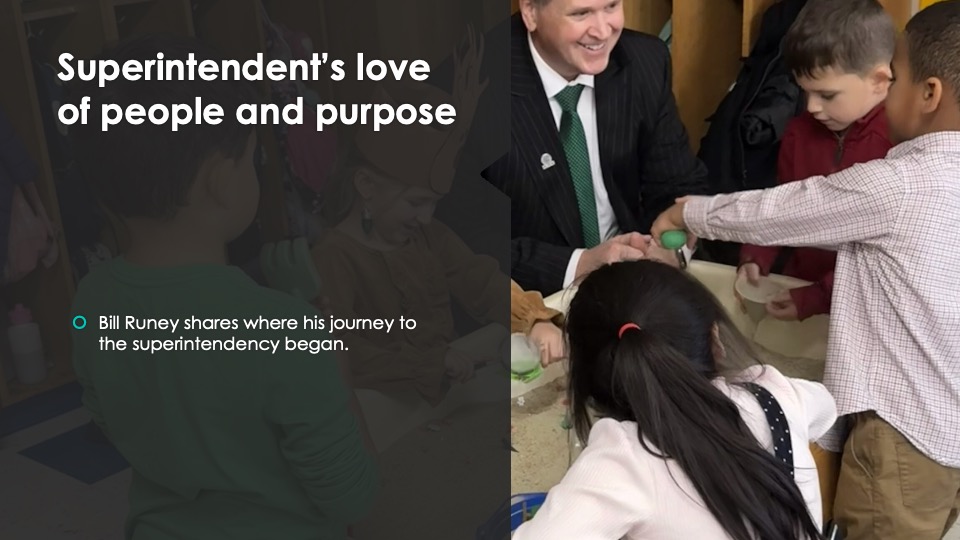
Martin, superintendent of the 6,800-student district, says taking on the student-intendent’s role has made her more visible as she participates in classroom instruction, rides the bus home and serves lunch in the cafeteria, among other activities.
When she sat in on a middle school class, she realized she needed to brush up on her math skills—and even sought help from the students.
“There have been a couple of situations where I was in a classroom, and they’re trying to help me,” she says. “Kids are just amazing; they are so kind and helpful. They feel bad for this lady who can’t figure out the answer.”
Communication is a key component of her leadership style. She holds office hours at schools and hosts a regular podcast. Some recent guests include graduating seniors and the cast of the fall musical. Photos from her “student-intendent” adventures are also posted on social media.
“Parents will see me in a classroom with their kids,” she explains. “It shows that I’m human and connecting.”
Superintendent reimagines school
Martin, who is beginning her second year as superintendent, has worked in Washington Local Schools for 20 years, rising from teacher to high school principal, to assistant superintendent, and ultimately to the top spot.
“I’ve had relationships with people and been able to have good rapport in the district,” Martin points out. “It was just such a natural progression. I didn’t come in and need to change a bunch of things because I’ve been part of the leadership team for years.”
She learned a lot about construction during her first year, as the district is building a new middle school for 1,600 students. She says she took only one facilities class in her licensure and coursework, but she’s now well-versed in reimagining how school buildings serve students.
Physically, that starts with furniture and filling the new school with flexible seating rather than traditional desks and chairs. Chronologically, that means rethinking the 45-minute bell schedule.
“We’re going to have a sixth-grade team of teachers and seventh- and eighth-grade teams and give them autonomy to run schedules that work best for kids,” she notes.
The school will also feature a wide range of hands-on activities, such as robotics labs and STEM makerspaces, that cover skills students need to pursue college and career paths. It’s part of a larger post-pandemic strategy to give students more reasons to attend school.
“We’re competing with all the things that they do at home with video games and social media,” she says. “To get them to come to school, you can’t have those desks in a row, traditional lecture style. It’s just not connecting with kids.
“It’s a different world,” she concludes. “We have to engage and earn that rapport with students. Kids know when you care about them.”