It’s hard to believe it’s already the 21st of June. I hope you’re getting some time off from the daily hustle and bustle of your districts. It’s been a slow week in the edu-sphere, but we’ve highlighted several topics you should read up on if you haven’t already, including Title IX.
Title IX gets blocked
There’s new controversy surrounding the Biden administration’s newest Title IX regulations. Earlier this week, a federal judge blocked the updated rules in six conservative states: Tennesee, Ohio, Indiana, Kentucky, Virginia and West Virginia.
The lawsuit claims an “attempt by the executive branch to dramatically alter the purpose and meaning of Title IX through rulemaking,” the document reads. The plaintiffs also argue that the new text redefines sex to include gender identity, violating First Amendment rights as a “result of arbitrary and capricious rulemaking.”
This decision comes after a slew of education leaders in several states, including Florida, Texas, Montana, Oklahoma and South Carolina, publicly advised school districts not to comply with the new Title IX ruling.
“You have rewritten Title IX to force schools to treat boys as if they were girls and to accept every student’s self-declared gender identity,” Texas Gov. Greg Abbott wrote in a letter to President Biden. “This ham-handed effort to impose a leftist belief onto Title IX exceeds your authority as president.”
The issue with cell phones and social media
In other news, more states are considering banning cell phones in their schools just as New York Gov. Kathy Hochul announced her vision to restrict student use of personal devices. The Los Angeles Unified School District just approved the nation’s largest districtwide cellphone ban, which takes effect in January. Superintendent Alberto M. Carvalho also pointed to the negative effects of social media.
“When coupled with social media, phones are a harmful vehicle that negatively impacts young people,” he said in a statement.
The entire state of California may soon follow, too. Gov. Gavin Newsom told Politico he intends to work with state lawmakers to “severely restrict” phones in public schools. You can read District Administration’s Matt Zalaznick’s coverage here.
More from DA: 2 big reasons teachers say they lag in workforce
Also topping national headlines, U.S. Surgeon General Vivek Murthy is advocating for warning labels on social media platforms like Facebook, Instagram, X and Snapchat. In an op-ed published in The New York Times, he writes that the mental health crisis among America’s youth is an emergency, and social media is a primary contributor. You can read my coverage about it here.
New from DA and FETC
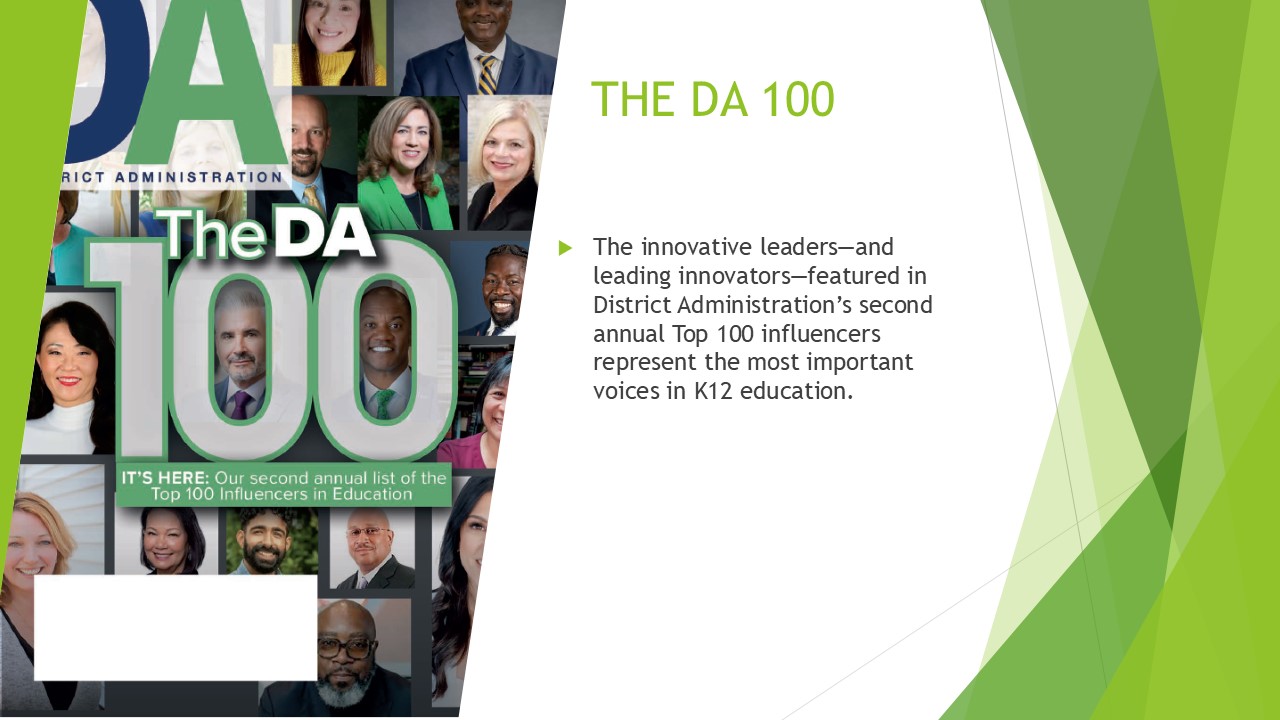
We’re continuing to showcase the recipients of DA’s “Top 100 Influencers in Education” award. You can read up on your colleagues by accessing the list—which receives updates weekly—here.
You should also catch DA’s latest “Talking Out of School” podcast where we discuss why K12 branding and marketing is so important for engaging with your community, especially as education issues become more politicized. You can listen to that episode here.
AI news
And now it’s time for your weekly scoop on what’s new in the world of artificial intelligence. On Thursday, the Future of Education Technology Conference’s Jennifer Womble hosted a free webinar showcasing 10 AI-powered edtech tools educators can use in their classrooms. If you missed it, you can always register afterward to receive the recording via email.
Finally, I’ve pointed to a couple of surveys surrounding AI in K12 that you should definitely breeze over. You’ll gain valuable insight into what students, teachers, parents and other stakeholders think about AI’s growing role in education:
- Teen and Young Adult Perspectives on Generative AI: Patterns of use, excitements, and concerns (Common Sense Media)
- AI Chatbots in Schools: Findings from a Poll of K12 Teachers, Students, Parents, and College Undergraduates (Impact Research)