High schoolers teach robotics to pre-K students

Date:

Share post:

Educators didn’t expose students to any screen time when introducing preschool coding and robotics in Miami-Dade County Public Schools’ childcare centers this past school year.

Also noteworthy were the teachers themselves: high school students enrolled in the district’s early education academies and studying to become childcare professionals.

“It’s a two for one,” says Cristian Carranza, the district’s executive STEM director. “The high school students are learning coding and programming, and they’re teaching pre-K kids who can then enter our robotics pathways in kindergarten.”

During the year the high schoolers guided the preschool coding students in arranging KinderLab Robotics’ wooden KIBO blocks printed with QR codes for a robot to scan.

The codes directed the robot through a series of actions; if the robot didn’t perform the expected tasks, the students rearranged the blocks. Then, they could come up with more complex instructions.

“It allows the preschool kids to see that the person in control is the programmer; it’s not magic,” Carranza says.

The preschool coding pilot, which took place at Coral Gables, Hialeah Gardens, John A. Ferguson and South Dade senior high schools, allowed the students in the early childhood academies to pick up a marketable skill that they may not have anticipated.
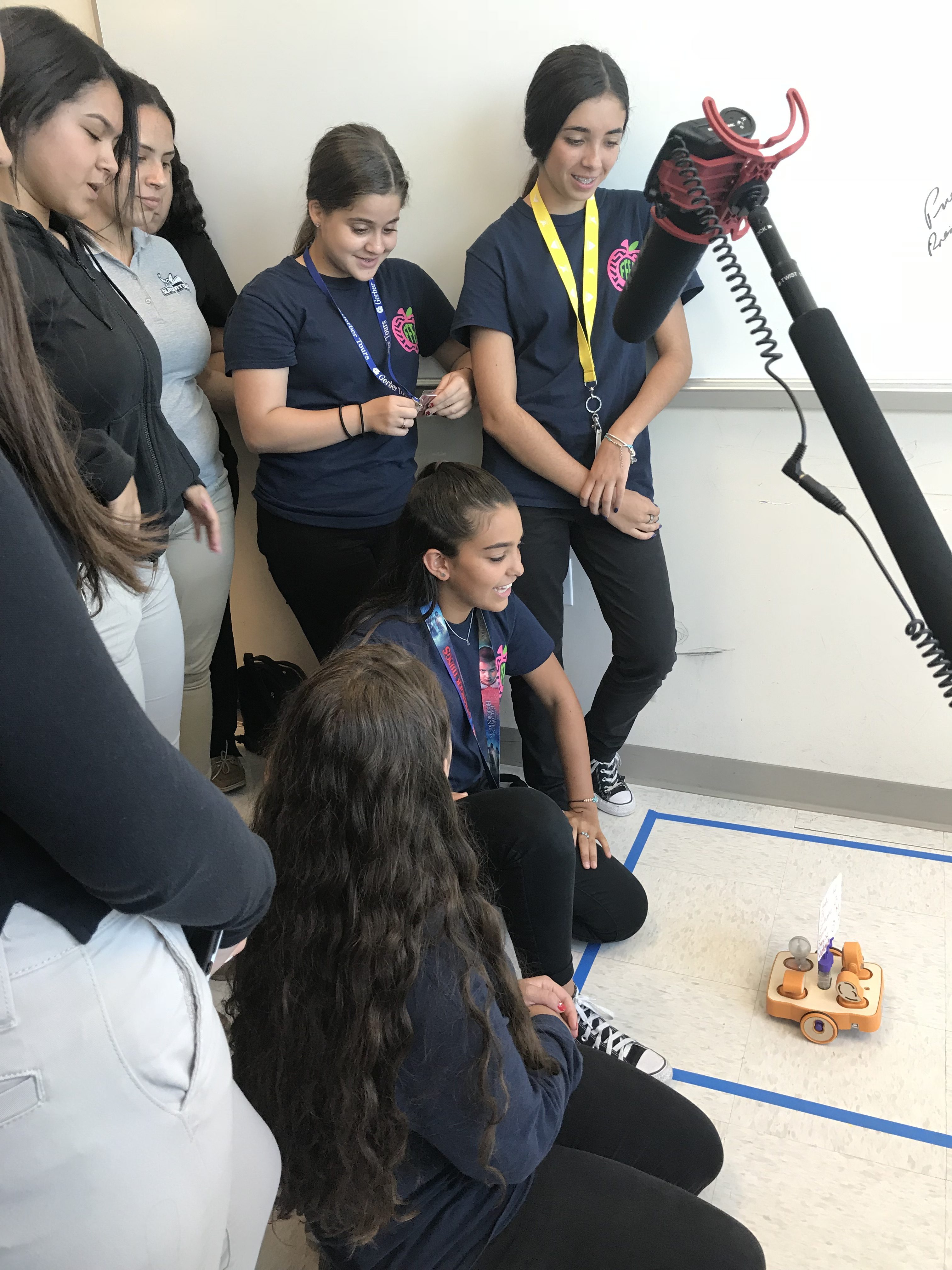
Miami-Dade County students studying to become early-childhood educators and child-care providers got expected training in robotics and coding.

“Many of the older students went into the early childhood education academy not necessarily expecting to do programming,” Carranza says.

Another benefit of the preschool coding program: Many of the preschoolers at the childcare centers were the children of Miami-Dade County Public Schools teachers.


Read more: STEAM lab puts youngest learners on career-ready path


“We’re helping our teachers’ kids get a leg up on programming even before they start public education,” he says.

The district hopes to expand the program in 2019-20 to other high schools that offer the early education pathway and also operate an in-house childcare center.

Matt Zalaznick
Matt Zalaznick
Matt Zalaznick is the managing editor of District Administration, covering K-12 public school leadership, teaching and learning, student achievement, education technology, and federal education policy. A journalist since 1996, Zalaznick has reported on politics, law enforcement, and breaking news for newspapers and websites across the U.S. Virgin Islands, the San Francisco Bay Area, Colorado, and the New York City suburbs. He holds a B.A. in English from Tufts University.

The Always-On Insight and Networking Platform for Superintendents and Their Teams

AI-driven insights peer-to-peer collaboration and more build exclusively for K-12 Superintendents and thier leaders
Built for the uniqueness of the superintendent role and their supporting team.Most platforms treat all K–12 leaders the same. DA+ recognizes that superintendents face a unique level of pressure, complexity, visibility, and responsibility—and gives them a space designed specifically for the demands of the top job.
A community where you don’t have to explain the context.Skip the backstory. DA+ understands the job, the politics, the stakes, and the pace.
Your decisions shape communities.Find the tools and peer insight to make them with confidence here.
Leadership tailored to the realities of running a district.From board relations to budgets, crisis response to community trust—DA+ focuses on the challenges only superintendents navigate each day.
Built for superintendents.Powered by superintendents. Trusted by superintendents. If you run a district, you belong here.

Related Articles