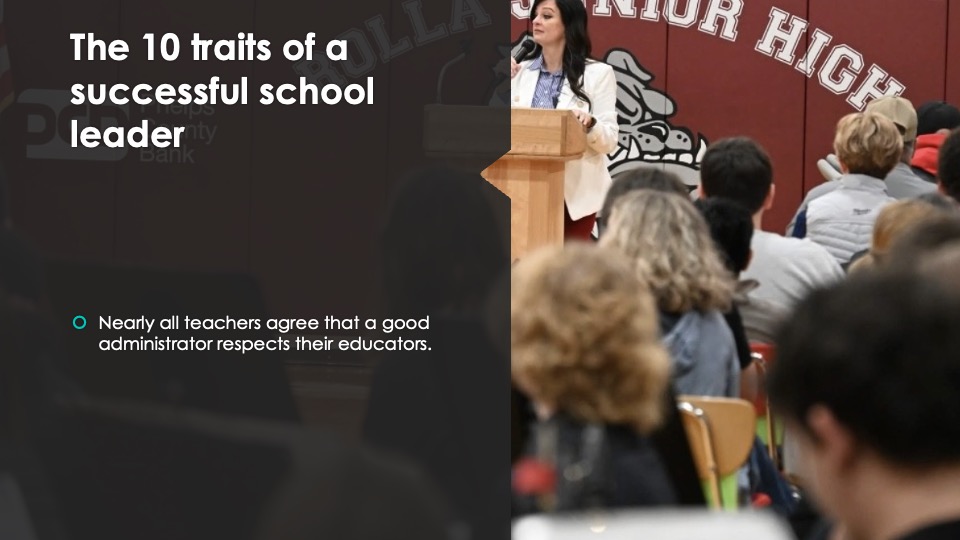
Career and technical education is a priority in Colorado’s Harrison School District 2, including at its K-8 school, where Principal Dr. Nicole Paxton is inviting students to dive into “exploratory” CTE offerings.
As a former math teacher with multiple CTE certifications, Paxton is no stranger to the importance of career readiness.
“It’s very important to me since I’ve stepped into the role of principal to continue to offer amazing opportunities for our students while being mindful of our limited resources,” she says.
Over the past year, Paxton has rapidly expanded Mountain Vista Community School’s course offerings by encouraging staff to pursue licensing in subjects aligned with students’ interests.
Now, students in grades 6-8 can take anything from media arts to LEGO robotics. Paxton and her team are in the process of licensing additional staff to incorporate a durable skills-style course for her special education students.

For middle schoolers, the district’s CTE program is purely exploratory, adds Nick Williams, the district’s CTE coordinator. Teachers are not asked to create “professionals,” but to introduce middle schoolers to careers they’re interested in.
High school is when students will approach CTE with more intentionality, Williams says. Among the district’s 11 offerings is Vehicle Maintenance and Repair Technologies, which, based on conversations with partnering dealerships, is producing some of the region’s best technicians, Williams says.
The district also partners with Colorado Mountain College to allow students to earn college credit while in high school. Students can enroll in the district’s paraprofessional program, which is treated as an apprenticeship.
“Hopefully, we’re building interest now and creating our future [teacher] pipeline,” Paxton says.
Teacher licensing and advice
In Colorado, the barrier to entry for a teacher seeking authorization to administer a CTE course at the middle school level is fairly low, according to Paxton. The only hurdle is the application process and evaluating teachers to find their best fit.
Most of her teachers are qualified to teach as they have at least three years of teaching experience or 2,000 hours of occupational experience.
Overall, Paxton says there’s been no difficulty getting teachers authorized to teach CTE courses because they’re just as excited as their students to engage in their passions.
“Our teachers also have passions,” she says. “They’ve been thrilled to offer outdoor education. We get out of the classroom and we’re not just doing PE, but we’re grilling, climbing, fishing and hiking, and we’re offering areas of interest for our staff, too.”
Paxton encourages leaders to discuss CTE with their colleagues regularly. For a program to be successful, those in charge must believe in its ability to enhance the student experience.
“You have to know what your teachers’ skill sets are, and you also have to know your students’ interests because that’s going to drive the courses you create,” Paxton says.
Progress is made when leaders embrace a vision of change, Williams adds.
“If you come with that attitude that you’re ready and willing to do what it takes to move the needle for growth and achievement, you’ll see that the practical application of CTE is what’s helping build communities,” Williams says. “When you’re willing to do the good work, good things happen.”