In light of the Trump Administration’s new federal AI guidance for schools, it’s safe to say the technology has earned its place in K12 education. Still, it’s up to district leaders to create a future-ready district by ensuring students and staff know how to use AI effectively and ethically.
Albuquerque Public Schools, which serves about 70,000 students, is at the forefront of using AI to deliver tailored instruction and streamline administrative tasks.
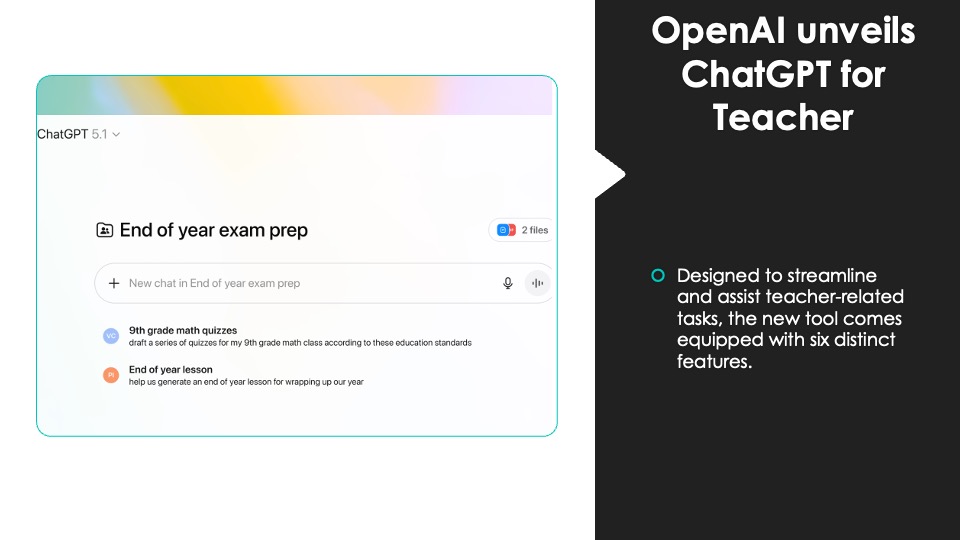
For instance, teachers are creating lesson plans and rubrics, differentiating instruction of assignments and giving feedback on student writing, according to Superintendent Gabriella Blakey. “It’s a time-saver for them,” she says.
The district has also integrated AI into its primary learning platform. Blakey says her middle and high school teachers have been piloting it, leveraging the tool for lesson planning, creating assignments, and, more importantly, taking care of the administrative tasks that often consume most of their time.
“Our teachers have found that it has really helped them focus more on their students and less on the things that take up their time,” she says.
None of this could be possible without proper guidance and training from the district. Blakey says the district’s AI policy ensures that teachers are following child protection laws.
Furthermore, the district has a team of educators, principals and technology leaders who vet the AI tools before they’re integrated for student use.
“They go through it, vet it to make sure it’s safe and makes sense instructionally,” she explains.
AI for administrative use
Blakey also uses AI herself. She says it’s helped analyze large datasets and collect feedback from her staff to give her a “10,000-foot view” of pressing issues.
Overall, she says staff who regularly use AI have been overwhelmingly positive. However, there’s sometimes still pushback from folks who don’t comprehend the technology and assume students can simply copy, paste and solve problems without digesting the information.
“That’s the kind of feedback we get when people don’t understand it,” she says. “Even in the classroom, our students are taught that AI can be used as a source. It’s a support tool. It doesn’t actually think for you.”
Advice for leaders
If you’re still on the fence about how AI can serve your district, Blakey recommends that you start small and assemble a team of teachers, IT staff, curriculum leaders, principals, and even legal advisors to vet every tool for compliance.
“I think having that team to integrate how we use AI has been one of the best things we’ve done,” she says. “And once those tools are vetted, it’s really important to develop a training and support system behind each one.”