“Future readiness” is a core goal in Huntley Community School District 158’s new strategic plan, and career and technical education is the catalyst for creating successful students.
Stakeholder vision
For the first time, the district’s newly finalized strategic plan, which extends through 2030, places a strong focus on CTE to achieve this goal, says Amy MacCrindle, assistant superintendent for learning and innovation. The plan was developed in large part thanks to internal dialogue involving parents, staff, administration and students.
“We’ve never had a goal centered around future readiness in our strategic plan, and I feel like that’s a strong example of how we’re preparing our students for what’s to come next,” she says.
Additionally, the strategic planning committee developed three key frameworks, known as “portraits”: a portrait of a learner, a portrait of a learning environment, and a portrait of a working environment.
The portrait of a learner is designed with a core focus on future readiness. Its attributes include being an empowered learner, a critical thinker, an engaged and responsible citizen, a skilled communicator and a future-ready individual.
“One of our key performance indicators is to design our multi-year framework connected to the portrait of a learner,” she says. “That will ensure that all of our students are being exposed to careers early on and they have those meaningful learning experiences.”
Promoting high-demand skills
Students aren’t lacking in CTE course offerings, says CTE Department Chair Nick Wedoff. With more than 60 courses to choose from, students have access to high-demand programs ranging from technology, business, computer science, engineering, family and consumer science and nursing.
The high school also provides specialized pathways, including a fine arts, medical, engineering and global academy. One popular example is the Geometry and Construction course, according to Huntley High School Principal Marcus Belin, who described it as a “double block class where we’ve merged math and the concepts of math with the physical development of structures and buildings.”
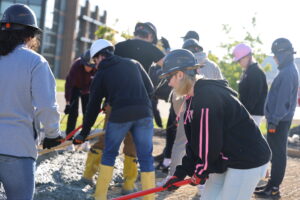
He also said students test their learning directly on campus, building outdoor classrooms, ticket booths and storage facilities, among other projects.
Community partnerships
An integral component of the district’s future-ready strategy is leveraging ties with local industry. Mentors regularly visit schools to evaluate students enrolled in the business computer and capstone engineering classes to evaluate their projects, according to Wedoff.
“They’re popping into classrooms and giving students feedback on the project, marketing strategies or manufacturing processes, hoping to help the students better understand local industry,” Wedoff explains.
These organic connections inevitably translate into advantageous post-secondary networks for students. Students working with local engineering firms in high school often end up in collegiate internships their freshmen year, compared to others who typically don’t land such opportunities until their senior year, Wedoff adds.
Transition services for special education
Meanwhile, the district ensures that special education students have access to a specialized transition service called the LIGHT Program. Launched in 2013, the program allows special education students ages 18 to 22 to obtain skills related to independent living and job training to help them successfully transition from high school to adult life.
The program leverages the same community partnerships used for the district’s traditional CTE courses to “set up those meaningful, accessible employment opportunities,” according to MacCrindle, who adds that they’re preparing to open its first student-run storefront.
A call for leaders: ‘Listen to your students’
District leaders told District Administration that to replicate the work Huntley Community Schools is doing surrounding CTE, it requires intentional planning rooted in the student voice.
MacCrindle argues it’s OK to start small. Focus on one or two high-demand pathways, then begin to incorporate grant dollars to help educators earn their certifications. Wedoff reiterates that leaders must engage with local business leaders to maximize the student experience.
Belin invites district administrators to embrace the new norm of preparing kids for life after school.
“We’ve got to listen to our kids,” Belin says. “Our kids are looking at alternative ways of education,” he says. He adds that such alternative options are growing in popularity because college isn’t always financially feasible.
More from DA: This principal has 3 tips for creating student leaders