When students know what makes them happy, they know what they’re passionate about. This is a key to re-engaging them in instruction, says Dr. Jorge Valenzuela, an education coach and STEM teacher.
Next year’s Future of Education Technology Conference will provide attendees with tangible skills designed to help transform their schools, including Valenzuela’s project-based learning (PBL) framework.
FETC 2026
Valenzuela, an education coach, author, speaker and STEM teacher at Old Dominion University, will bring his long-term systemic work to the stage at FETC, delivering a PBL masterclass and several other sessions designed to provide educators with:
- A ready-to-use framework and Inventory to help students explore their interests and passions to make learning meaningful
- Strategies for making lessons engaging and relevant by linking them to real-world applications of AI
- Tools and resources to support diverse learners and prepare students for a future shaped by artificial intelligence
In one session, Valenzuela will teach educators how to use his Passion to Purpose framework, which connects students’ passions and purpose with essential life skills—using AI as the anchor.
“For years, I followed ‘the script’: school, college, 9-to-5, family,” he says. “It wasn’t until my mid-30s that I realized I needed to create my own path, which led me to build the Passion to Purpose framework.”
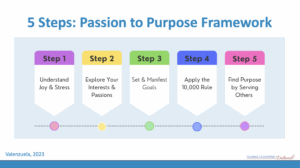
The framework guides educators on supporting students in taking the five steps to connect their passions to a purpose:
- Step one: Understand the causes of happiness and stress
- Step two: Consider your passions and interests
- Step three: Set goals and use manifestation (transforming ideas into reality) to accomplish them
- Step four: Apply the 10,000-hour rule (the number of hours it takes to develop mastery of a given skill) to build expertise
- Step five: Find purpose and fulfillment by serving others
Step one begins by addressing a pressing problem across K12. “I visit a lot of schools and a lot of young people don’t want to be there,” Valenzuela explains. “They don’t see learning as relevant to the things that they care about, and also the things that they want to do in the future.”
Students need guidance in assessing their self-knowledge and developing the emotional maturity to make decisions that lead to a purpose-driven life.
“Now that they’ve made this distinction and they know how to make themselves happy, they can consider their interests and their passions using an inventory,” he says.
Here’s a clip of Valenzuela keynoting, explaining this concept in further detail.
Building your brand
Many former educators and superintendents become consultants in their respective fields of expertise. At FETC 2026, Valenzuela will also share his AI-driven strategies for excelling in education consulting.
His “AI-Driven Online Presence Development” session will cover how educators strengthen their brands, build content, market effectively and leverage tools like generative AI.
Branding comes first because, in today’s world, your reputation and presence often speak before you enter the room.
“We should be getting in front of the narrative,” he says. “Whether we’re a coach, a teacher, an administrator, we begin building our brand the way that we want to be seen, because if we don’t, other people will get in front of that narrative for us, which may not work in our favor.”
Read more about Valenzuela’s upcoming sessions at FETC here.
More from FETC: FETC 2026: Amy Storer wants to make your education life easier